
Charades & Headbands Game
artGSWord
4.2545.00 Reviews
- Version
- 7.1.7
- Installs
- 10.00M
- Age Rating
- Everyone
Screenshots


Our Review of Charades & Headbands Game
 Analysis by Appyee
When I’m looking for a game that gets a group talking without asking anyone to learn a complicated set of rules, I gravitate toward quick guessing games. Charades & Headbands Game fits that familiar party format: one person holds a phone to their forehead while everyone else offers clues. Its appeal is less about deep strategy and more about the little bursts of chaos that happen when a clue is misunderstood or a guess comes out completely wrong.
What free access does—and doesn’t—settle
The game is free to download, which makes it easy to try before deciding whether it deserves a place in your regular get-together rotation. There are in-app purchases, with listed item prices ranging from $0.99 to $260.90. That wide range is worth noticing, but it doesn’t tell me what each purchase contains, so I wouldn’t treat the highest figure as a necessary cost of playing. I’d start with the free experience and consider spending only if I encountered an item I actually wanted.
That distinction matters for a casual party game. A free download lowers the barrier for a host who wants a quick activity, while optional purchases mean the overall value depends on what you choose to buy. I wouldn’t assume that paying is required to enjoy a round, and I wouldn’t spend simply because a purchase is available. For a game that often comes out for a few minutes between meals or conversations, free access is the most persuasive part of the value proposition.
Where the value comes from
This is a word and guessing game from artGS, designed for people sharing a room rather than playing through a long solo campaign. The phone supplies the prompt and the group supplies the performance. That division is useful: the app gives a gathering a clear activity, but the entertainment still comes from the people playing, not from a complicated game system that demands everyone’s attention.
That makes it a particularly easy choice when a group includes people who don’t know one another well. A prompt gives everyone something immediate to react to, and the person guessing becomes part of the joke without needing to be especially good at trivia. I’d reach for it at a family visit, a casual birthday gathering, or a night when conversation has slowed and nobody wants to organize a full board game.
Its value is also social rather than competitive in a serious sense. If your group enjoys seeing someone act out a clue, shouting suggestions, and laughing at near misses, the basic idea can carry a lot of the evening. If everyone would rather quietly solve puzzles alone, the same design is a poor match; this game needs active clues from other people to work.
How it plays in a real gathering
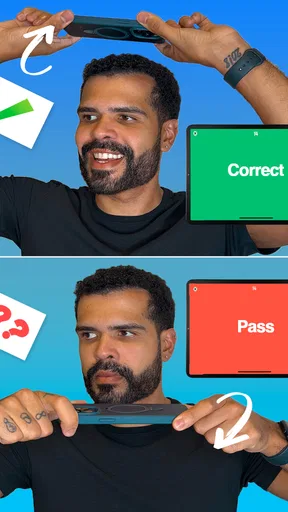
The phone-on-the-forehead format has a practical advantage over passing a device around: the guesser doesn’t have to read the prompt, and the group can focus on giving clues. A realistic use is to start a round while people are waiting for food or settling in. I’d explain the basic gesture controls, choose a category that suits the people in the room, and keep the first turn short so newcomers can see the rhythm before taking their own turn.
One small but useful hosting tip is to agree on clue boundaries before the game begins. For example, a group can decide whether sound effects, gestures, or references to a person in the room are fair. That avoids interruptions over what counts as a helpful clue, especially when children and adults are playing together. The app can provide the prompt, but a quick shared rule makes the room feel fairer and keeps the round moving.
Choosing the right setting for your group
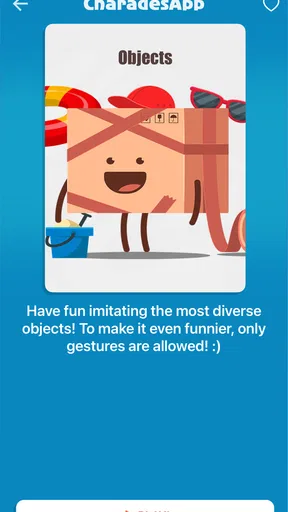
Category choice can change the whole mood of a round. Familiar subjects are a safer opening when players have different ages or interests; more unusual prompts are better once everyone understands how quickly the clues need to land. I’d avoid treating the most obscure category as automatically the funniest one. If players have no shared reference for a prompt, the turn can stall for reasons that have little to do with anyone’s guessing skills.
There’s also a useful way to handle mixed-confidence groups: let the most outgoing person guess first, then invite quieter players to take the phone once they’ve watched a round. That gives people a chance to understand the pace without putting them on the spot immediately. For a family gathering, I’d rotate turns rather than letting the fastest volunteers dominate; otherwise, the game can become an activity for only the loudest few.
The format works best when the room is small enough for everyone to hear the clues. In a noisy gathering, players may need to come closer or take turns in a smaller circle. That is a genuine limitation of a game built around spoken hints: it doesn’t naturally solve the problem of several conversations happening at once. If you want something that works while people are spread across a large space, a tabletop activity with visible pieces may be easier to manage.
How it compares with other word games
Compared with a crossword, word search, or solo vocabulary game, this is not a quiet way to pass time on your own. Its central activity depends on a group giving clues aloud, so it is better understood as a social prompt than as a conventional word puzzle. Compared with a boxed charades game, the phone has the convenience of keeping prompts together in one place, while a physical game may feel easier for a group that prefers cards on the table and no screen in the middle.
It also differs from trivia games: people don’t need to know a fact and recall its exact answer so much as interpret clues under a little time pressure. That makes it more accessible to guests with different levels of knowledge, though it can still favor people who are quick at improvising. If your group wants structured scoring, detailed rounds, or a more strategic contest, I’d look for a game built around those priorities instead of expecting this format to supply them.
Practical expectations and tradeoffs
The game is rated for Everyone, which makes it a reasonable candidate for mixed-age play, but the group still sets the tone. I’d choose prompts and clue styles with the youngest players in mind, and I’d be ready to skip anything that doesn’t suit the people present. An age rating is useful context, not a substitute for a host making a sensible choice for a particular family or gathering.
The store listing shows a 4.0 average from around 148,000 ratings, with more than 10 million installs. Those figures suggest that many people have tried it, but they don’t tell me whether a particular group will enjoy performing clues. The decisive question is simple: are your friends or relatives comfortable being a little silly in front of one another? If yes, the game has a clear path to working well. If not, a less performative activity may be a kinder choice.
It has been available since June 14, 2016, and its current version is 7.1.2. It supports Android 5.0 and later. Those details help someone check basic compatibility, but they don’t change the main tradeoff: this is a lightweight group game whose success depends on a willing, audible, engaged crowd. I wouldn’t choose it as a substitute for a full evening’s entertainment if the group expects a long progression or a solo mode.
Who is likely to get the most out of it?
I’d recommend giving it a try if you host casual gatherings, need an activity that can begin without much explanation, or want something that gets several generations participating together. It can also help a group of friends break out of the familiar pattern of everyone looking at separate phones: one device becomes a shared prompt, and the rest of the room has a reason to interact.
I’d skip it if you dislike performing, if your group is too large or noisy for clues to carry, or if you want a game with substantial solo play and long-term goals. It may also be a weak fit for a gathering where people don’t share enough language or cultural references to make clue-giving comfortable. In those situations, a visual tabletop game, a cooperative board game, or a quieter word puzzle can be a better use of everyone’s time.
Getting Started with the Game
First things first, downloading the app was a breeze. Available on both Android and iOS, I quickly found it on the app store, hit download, and was ready to play in no time. The interface is super user-friendly, making it easy to jump right into the action without any hiccups.
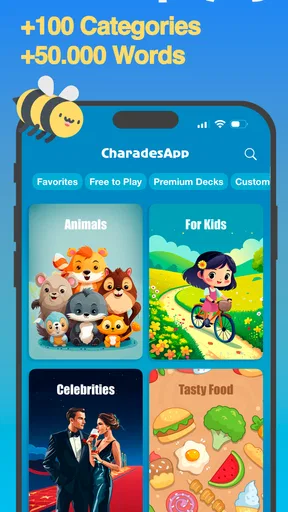
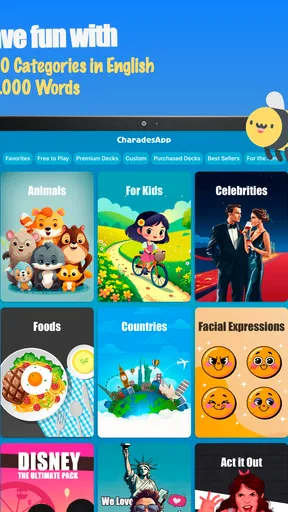
Once you open the app, you’re greeted with a vibrant and colorful menu. It’s quite inviting! You have a bunch of categories to choose from – movies, music, animals, and even quirky ones like "Things You Shouldn't Do." The variety ensures that there's something for everyone, whether you're playing with family or a group of friends.
How It Works
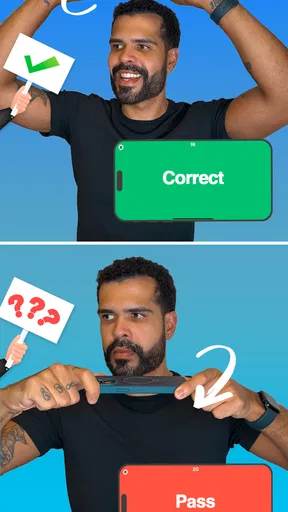
The premise is simple yet engaging. You hold the phone up to your forehead, showing the word or phrase to the rest of the group, and they give you clues to guess what it is. Talk about an icebreaker! The app uses the phone’s sensors to detect when you tilt it, so you can easily pass, guess, or skip without needing to touch the screen. Pretty neat, huh?
One feature I really loved was the option to record the game session. You can capture those hilarious moments when someone tries to mime a kangaroo or sing like a rockstar. Trust me, these recordings are gold, and you’ll be watching them over and over again.
The Fun Factor
Now, let's talk about the real deal – the fun factor. Honestly, Charades & Headbands Game adds a whole new level of excitement to any gathering. It's amazing how a simple concept can lead to hours of entertainment. The laughter and energy it brings are infectious. Plus, it’s a great way to break the ice if you're meeting new people.
The app is perfect for all ages. Kids can enjoy it just as much as adults, making it a fantastic family game. There's nothing quite like seeing everyone involved and having a good time, no matter the age differences.
Why You Should Try It
If you’re still on the fence about downloading this app, let me give you a nudge. Not only is it a great way to entertain guests, but it’s also a fantastic tool to improve your quick thinking and problem-solving skills. You’ll be surprised at how your brain kicks into gear when you're under the pressure of the timer.
Plus, the app is constantly updated with new categories and words, so it never gets old. It’s like having an endless supply of fun at your fingertips. And did I mention it’s free? While there are in-app purchases available, the basic version offers plenty to keep you entertained.
Final Thoughts
In conclusion, if you're looking for a way to inject some fun into your life, Charades & Headbands Game is a must-try. It’s easy to use, incredibly entertaining, and perfect for any social occasion. Whether you’re hosting a party, having a family night, or just chilling with friends, this app will bring endless laughter and joy.
So, go ahead and give it a whirl. Download it, gather your crew, and get ready for an unforgettable time. You won’t regret it!
Verdict
Strengths of Charades & Headbands Game
- Fun for all ages, easy to pick up.
- Wide variety of categories available.
- Requires no internet connection.
- Encourages social interaction and laughter.
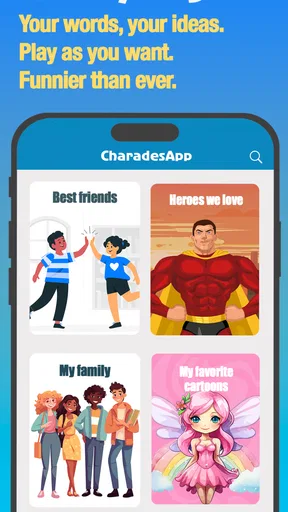
- Customizable settings for unique play.
Limitations of Charades & Headbands Game
- Limited free content; in-app purchases.
- Ads can interrupt gameplay frequently.
- Requires multiple players to enjoy.
- Some categories are too niche.
- Timer settings lack flexibility.
Similar Picks in This Category
View All
Word Search - Word Puzzle Game
Bluetile4.8

Word Search Quest - Puzzles
Blackout Lab4.8

CodyCross: Crossword Puzzles
Fanatee, Inc.4.7

Words of Wonders: Crossword
Fugo Games4.9

Wordscapes: Word puzzle game
PeopleFun4.7

Word Search Explorer
PlaySimple Games4.9
Frequently Asked Questions
What is Charades & Headbands Game about?
Charades & Headbands Game is a fun, interactive party game where players guess the word displayed on a digital card held to their forehead. The other players give clues without saying the word directly. It's a great way to entertain guests and enhance group dynamics with its variety of categories and themes.
How many players can participate in Charades & Headbands Game?
The game is designed for group play and can accommodate as few as two players or a large group. Typically, more players enhance the experience, as it allows for diverse interaction and a range of hints. It’s perfect for family gatherings, parties, or casual hangouts with friends.
Are there different categories available in Charades & Headbands Game?
Yes, the game includes a wide range of categories such as movies, animals, celebrities, and more. This diversity ensures that there's something for everyone, keeping the game fresh and engaging. Players can choose their preferred category or mix things up for a more challenging experience.
Is Charades & Headbands Game appropriate for all ages?
The game is family-friendly and suitable for all ages, with certain categories tailored for younger players and others designed for adults. Parents can supervise and select categories to ensure the content is appropriate, making it a versatile choice for family entertainment.
Does Charades & Headbands Game require internet access to play?
No, Charades & Headbands Game does not require an internet connection once it is downloaded. This makes it convenient for playing in various settings, including places without Wi-Fi or mobile data, such as during outdoor activities or travel.
Play our best games!


